
Blended Learning: Vorteile für KMU
In der Digitalisierung der betrieblichen Weiterbildung hat sich Blended Learning als wichtiges Schlüsselkonzept etabliert. Welche Vorteile bietet das Konzept für kleine und mittlere Unternehmen? Und was gibt es bei der Umsetzung zu beachten?

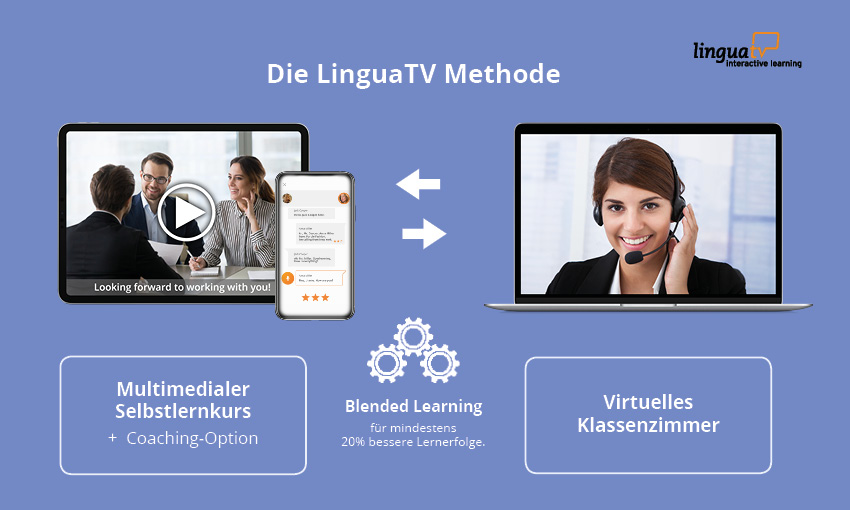
Blended Learning setzt auf eine optimale Verknüpfung von Präsenzunterricht und E-Learning. Bei diesem Konzept werden verschiedene Medien und Methoden miteinander kombiniert, wie etwa Microlearning, mobile Anwendungen oder der Einsatz von Videos. Ziel ist es dabei, die Vorteile der jeweiligen Lernform zu verstärken und deren Nachteile zu minimieren. Bei richtiger Umsetzung lassen sich dadurch bis zu 20% bessere Lernergebnisse erreichen.
Was Blended Learning speziell für kleine und mittlere Unternehmen so attraktiv macht, ist der hohe Grad an Flexibilität. So lässt sich eine individuell optimierte Lernlösung zusammenstellen und gezielt an die Bedürfnisse des Unternehmens und der Lernenden anpassen. Beispielsweise kann der Präsenzunterricht auch im virtuellen Klassenzimmer durchgeführt werden, sodass auch Mitarbeitende aus anderen Unternehmensstandorten oder aus dem Home Office problemlos an dem Training teilnehmen können. In Kombination mit den E-Learning-Komponenten, die im besten Fall auch mobil verfügbar sind, kann somit eine zeit- und ortsunabhängige Weiterbildung angeboten werden.
Insbesondere bei Unternehmen mit verschiedenen Standorten kann ein umfassendes Blended Learning Konzept den Wechsel von uneinheitlichen Insellösungen zu einer globalen Lösung erleichtern. Administrative Abläufe und Kosten, sowie Qualitäts- und Bildungscontrolling können somit unternehmensweit optimiert werden. Die cloud-basierten Lernangebote können unabhängig von der unternehmensinternen Infrastruktur schnell, umfassend und ohne Einbußen bei Sicherheit und Qualität bereitgestellt werden. Unabhängig von den eingesetzten Learning-Management-Systemen und Standards (SCORM), wird mithilfe von Standardschnittstellen (APIs) die Integration ins Unternehmen gewährleistet.
Fazit:
Blended Learning ermöglicht insbesondere kleinen und mittleren Unternehmen die Öffnung von Schulungsmaßnahmen für moderne Technologien ohne den Präsenzunterricht ganz aufgeben zu müssen. Auch ist die Veränderung nicht so radikal, dass eine fehlende Akzeptanz bei den Mitarbeitern/-innen zu befürchten wäre. Ein durchdachtes Blended Learning-Konzept ist somit ein „best of both worlds“, welches dabei hilft, die Digitalisierung und Transformation der betrieblichen Weiterbildung in kleinen und mittleren Unternehmen erfolgreich und nachhaltig umzusetzen.
Zur weiteren Lektüre empfehlen wir Ihnen unser kostenloses Whitepaper: “Blended Learning in Unternehmen”.
Falls Sie mehr Informationen benötigen, weitere Fragen haben oder ein individuelles Angebot wünschen, kontaktieren Sie uns bitte über das Kontaktformular. Bei Bedarf bieten wir Ihnen gerne eine persönliche Beratung!