
Learning Experience Plattform (LXP) – Was verbirgt sich hinter dem neuen Trend?
3 Beispiele aus dem Bereich Sprachtraining.
Learning Experience Plattformen sind der neue große Trend im Bereich E-Learning. Sie versprechen ein neues Lernerlebnis zu schaffen und setzen dabei unter anderem auf eine flexiblere Auswahl von Inhalten, soziale Interaktion und individuell optimierte Lernpfade. Die folgenden drei Praxisbeispiele zeigen, welche spannenden neuen Möglichkeiten sich dadurch ergeben.

Mahmud blickt gebannt auf sein Handy. Seine Azubi Kollegin Teresa hat gerade einen neuen Beitrag geteilt: Ein YouTube Video über die chemischen Grundlagen von Putzmitteln. Die beiden sind erst seit ein paar Jahren in Deutschland und machen nun eine Ausbildung zum Gebäudereiniger. Ihre größte Herausforderung liegt dabei jedoch in der deutschen Sprache, denn neben der Praxis sollen sie an der Berufsschule auch das theoretische Fachwissen lernen – von Putzplänen, über Reinigungsprozesse bis hin zu Gesundheits- und Sicherheitsvorschriften. Um sie dabei zu unterstützen, hat ihr Arbeitgeber nun eine neue Form des Deutsch-Unterrichts eingeführt. In Kleingruppen lernen Sie nicht nur Vokabeln und Grammatik, sondern sprechen auch über technische Inhalte ihrer Ausbildung. Das besondere dabei: Sie können selbstständig Inhalte erstellen und diese mit ihren Kollegen teilen – YouTube Videos, Fotos aus ihrem Arbeitsalltag oder Links zu hilfreicher Lektüre. Am Ende des Unterrichts soll somit eine ausführliche Content Sammlung entstehen, von der auch zukünftige Azubis profitieren können.
2. Gemeinsam lernt man besser
Der, die, oder das? Sich im Deutschen die richtigen Artikel einzuprägen ist mühsam und kann auf Dauer sehr eintönig werden. Das muss nicht so sein, dachte sich der englischsprachige Programmierer James und hat für LinguaTV als neue Übungsform ein Quiz-Duell entwickelt. Die Teilnehmer verbinden sich dafür mit Ihren Smartphones und treten in einem kurzweiligen Wettbewerb gegeneinander an. Der Spaßfaktor ist bei dieser Form des Social Learnings garantiert und zusätzlich zu den Sprachkenntnissen wird auch noch der Teamgeist gestärkt.
3. Individuelle Schwerpunkte setzen
Gibt es den Capuccino auch mit Sojamilch? Und die Lasagne ohne Fleisch? Fragen wie diese bekommt Melissa jeden Tag gestellt. Inzwischen kann sie die meisten davon in vier verschiedenen Sprachen beantworten. Das ist auch nötig, denn sie arbeitet im Restaurant einer internationalen Hotelkette. Ihr Kollege Klaus arbeitet im Management desselben Hotels. Für seine Arbeit benötigt er vor allem sehr gute schriftliche Englischkenntnisse, da er jeden Tag bis zu 20 E-Mails an internationale Kunden und Partner verschickt.
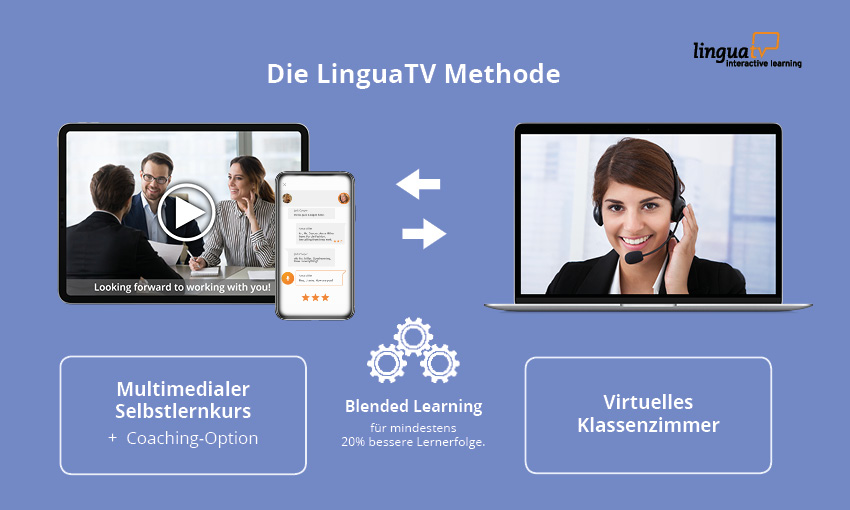
Um diesen sehr unterschiedlichen Bedürfnissen seiner Mitarbeiter gerecht zu werden, setzt das Hotel auf eine Kombination aus der LinguaTV Sprachlern-App und einer individuellen Betreuung (Coaching). Nach einer Analyse von Bedarf und Lernzielen kann somit eine persönliche Lernstrategie entwickelt werden. Zusätzlich haben die Lerner die Möglichkeit, flexibel eigene thematische und methodische Schwerpunkte zu setzen und somit einen individuell optimierten Lernpfad zu erstellen.
Fazit
Der aktuelle Trend geht zu Lernlösungen, die stärker auf individuelle Unterschiede und Bedürfnisse eingehen. Dabei sollten diese aber trotzdem skalierbar sein und zu überprüfbaren Lernerfolgen führen. Learning Experience Plattformen haben diesem Trend nun eine neue Dynamik verliehen und bieten sowohl methodisch als auch inhaltlich spannende neue Möglichkeiten. Damit Sie diese optimal für das Sprachtraining Ihrer Mitarbeiter nutzen können, empfiehlt es sich, eine genaue Bedarfsanalyse durchzuführen und auf dieser Grundlage eine individuell angepasste Lösung zu entwickeln.
Die Bildungsexperten von LinguaTV stehen Ihnen für eine kostenlose Beratung gerne zur Verfügung.