
Micro Learning – Möglichkeiten und Vorteile von kurzen Lerneinheiten
Mal ganz ehrlich: Wer hat heutzutage Lust, mehrere Stunden am Stück zu lernen; noch dazu neben dem Arbeitsalltag? Vermutlich die wenigsten. Deswegen geht der Trend hin zum Micro Learning. Fast 80% der vom eLearning-Journal befragten 400 Unternehmen setzen auf Micro Learning. Doch was ist Micro Learning, welche Vorteile bringt es mit sich und wie lässt es sich umsetzen? Das erfahren Sie in diesem Artikel und der verlinkten Fallstudie.
Mit Micro Learning der „Vergessenskurve“ ein Schnippchen schlagen
Micro Learning sorgt durch seine modulare Struktur und der einfacheren Einbettung in den Alltag für eine häufigere und nachhaltigere Wissensvertiefung. Damit sind mehrere kleine „Lernhappen“ einer herkömmlichen E-Learning-Einheit, die an einem Stück absolviert wird, didaktisch überlegen: Denn 60% des soeben Gelernten werden nahezu sofort wieder vergessen, der Rest mit der Zeit, wenn auch langsamer.
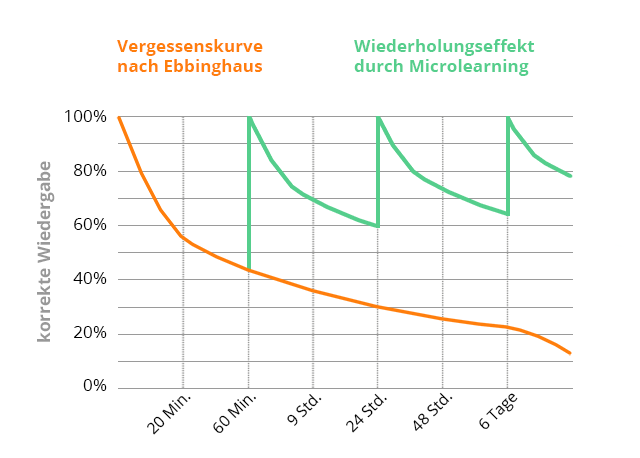
Die „Vergessenskurve“ zu durchbrechen ist die zentrale Herausforderung in der betrieblichen Aus- und Weiterbildung – das Credo heißt also wiederholen, wiederholen und nochmals wiederholen. Hierzu eignen sich mehrere kleine Lernsprints besser als ein langer Lernmarathon. Zudem führen große Lerneinheiten mit hoher Informationsdichte zu einem befristeten Erinnerungsvermögen und schnellerem Vergessen im Vergleich zu einem regelmäßigen Abfragen des Gelernten. Der Erfolg durch große Lerneinheiten ist demnach vergänglich und verschwindet schnell. Lernen sollte deshalb auf mehrere Einheiten aufgeteilt werden – dann zeigen die Lernenden deutlich bessere Ergebnisse in der Erinnerung.
Größere Verfügbarkeit Dank mobiler Endgeräte
Nichts eignet sich dafür besser als kleine und vor allem unterhaltsame Lerneinheiten, die bequem in den Berufsalltag eingebettet werden können: Das in einer kleinen Lerneinheit Gelernte wird mehrmals wiederholt und so vertieft. So können große Lerneinheiten in mehrere kleine aufgeteilt werden. Das bringt – neben dem didaktischen Nutzen des Unterbrechens der Vergessenskurve – weitere, auch organisatorische Vorteile mit sich: Micro Learning ermöglicht dem Lernenden, in seinem Tempo zu lernen – nicht nur innerhalb einer Lerneinheit, sondern auch zwischen mehreren Modulen zu einem Thema. Und es ermöglicht „Learning on Demand“, was den Konsumgewohnheiten vieler Lerntypen entspricht. Dank mobiler Apps können die Lerneinheiten auch unterwegs bearbeitet werden. Durch die größere Verfügbarkeit auf mobilen Endgeräten, erreichen Unternehmen auch mehr Lernende – nämlich auch die Mitarbeiterinnen und Mitarbeiter, die keinen PC-Arbeitsplatz haben oder viel unterwegs sind. Dies zeigt sehr anschaulich das mit dem E-Learning-Award ausgezeichnete erfolgreiche Micro Learning Projekt der Firma Gegenbauer.
Erfolgsfaktoren des Micro Learnings
Ausschlaggebend für erfolgreiches Micro Learning sind geeignete Inhalte und Formate sowie deren didaktisch sinnvolle Aufbereitung. Nicht alle Lerninhalte und -formate eignen sich per se für Micro Learning. Kurze Video-Tutorials und interaktive Lernspiele eignen sich hervorragend für kleine Lerneinheiten.
Darüber hinaus sorgen Interaktion und Gamification in Micro-Trainings dafür, dass der Lernende nicht nur rezipieren kann, sondern selbst aktiv werden muss. Im Vordergrund steht die Interaktion des Lernenden mit den (hoffentlich attraktiven und unterhaltsamen) Lerninhalten – zum Beispiel in interaktiven Lernspielen oder Rollenspielen. Selbstverständlich sollten Interaktionen kein Selbstzweck sein, sondern das Lernen auf verschiedenen Ebenen unterstützen. Dabei gibt es verschiedene Interaktionsmöglichkeiten, deren Einsatz von der Komplexität des Themas, der Zielgruppe und dem gewünschten Lernziel abhängt. Spielerisches Lernen (sogenanntes Gamification) steigert die Lernmotivation nochmals, erhöht die Verarbeitungstiefe und sorgt so dafür, dass Inhalte noch nachhaltiger vermittelt werden. Beispiele hierfür sind das Lernen mit und gegen andere Lernende oder gegen die Zeit, das Sammeln von Punkten, Auszeichnungen, etc.

Neben Interaktionen, die den Lernprozess unterstützen, ist auch Storytelling, das den Rahmen der verschiedenen modularen Lerneinheiten bildet, relevant, um für die Inhalte zu begeistern und dafür zu sorgen, dass Lernen Spaß macht. Lerninhalte eingebettet in kurze Geschichten sorgen dafür, dass das Lernen im Kontext erfolgt – zum Beispiel in Verbindung mit einer authentischen Gesprächssituation aus dem beruflichen Umfeld des Lernenden. Das wiederum wirkt sich positiv auf die Aufmerksamkeit und die Motivation des Lernenden aus.
Diese Komponenten in einer optimalen Kombination ergibt eine Win-Win-Situation und macht Micro Learning zum König der Wissensvermittlung in Unternehmen.
Sie möchten mehr über die Möglichkeiten von Micro Learning im Rahmen von Sprachkursen erfahren? Dann kontaktieren Sie uns bitte. Wir haben viele Sprachtrainings in Form von Micro Learning erfolgreich umgesetzt.