
Corporate Learning Trends 2022
Während der Pandemie hat die betriebliche Weiterbildung einen enormen Digitalisierungsschub erfahren. Wie ist der aktuelle Stand? Und wie geht es weiter? Wir haben für Sie die aktuellen Ergebnisse zusammengefasst und präsentieren die wichtigsten Trends für das Corporate Learning im Jahr 2022.
Corona hat unseren Alltag nachhaltig beeinflusst, das gilt im Privaten wie im Beruflichen und natürlich auch für das Corporate Learning. Pandemiebedingte Kontaktbeschränkungen und der großflächige Einsatz von Homeoffice waren dabei auch im vergangenen Jahr erneut wichtige Taktgeber für den rapiden Ausbau digitaler Trainingslösungen. Doch wie sehen die konkreten Zahlen dazu aus?
Umfragen des ifo-Instituts und der Deutschen Telekom ergaben, dass bereits ein knappes Jahr nach Beginn der Pandemie rund 80% der Unternehmen mobile Arbeitsplätze zumindest für einen Teil ihrer Mitarbeiter anbot. Dass es dabei nach wie vor große Unterschiede zwischen den jeweiligen Branchen gibt, dürfte die wenigsten überraschen. Äußerst spannend sind dagegen die Ergebnisse einer aktuellen Studie des ifo Instituts und der Katholischen Universität Eichstätt-Ingolstadt (KU). Die Auswertung von mehr als 35 Millionen Stellenanzeigen ergab, dass sich die Homeoffice-Angebote 2021 gegenüber 2019 mehr als verdreifacht haben. Die Mehrzahl der Unternehmen wolle demnach auch langfristig eine Homeoffice-Option anbieten. Das entspricht auch den Wünschen vieler Arbeitnehmer. Denn über 70% der Deutschen befürwortet laut Statista sogar einen gesetzlichen Anspruch auf Homeoffice.
Wie stark sich der Trend hin zu mobilen Arbeitsplätzen tatsächlich auf die Weiterbildung auswirkt, belegt die aktuelle Benchmarking Studie “Bildungstechnologien im Wandel”. Demzufolge haben 91,2% der befragten Unternehmen während der Pandemie ihre Investitionen in digitales Lernen weiter ausgebaut, während gleichzeitig in 40% der Fälle das Budget für Präsenztraining gekürzt wurde. Die Mehrheit (55,1%) der befragte Unternehmen plant außerdem auch nach Corona das digitale Training weiter auszubauen. Unter den verschiedenen Bildungstechnologien weit vorne liegt der Einsatz von Videokonferenz-Software (82,8%), zumal in vielen Fällen der Präsenzunterricht in das virtuelle Klassenzimmer verlegt wurde. Das größte Wachstumspotenzial sehen die Studienteilnehmer jedoch bei videobasierten Formaten (84,7%), wie z.B. Lehrfilme, stand-alone Video-Content, oder Erklärvideos. Aber auch Aufzeichnungen von Webinaren oder Virtual Classroom Sessions sollen nun vermehrt zum Einsatz kommen. 71,3 % gehen davon aus, dass auch Microlearning und WBTs in Zukunft weiter ausgebaut werden sollen.
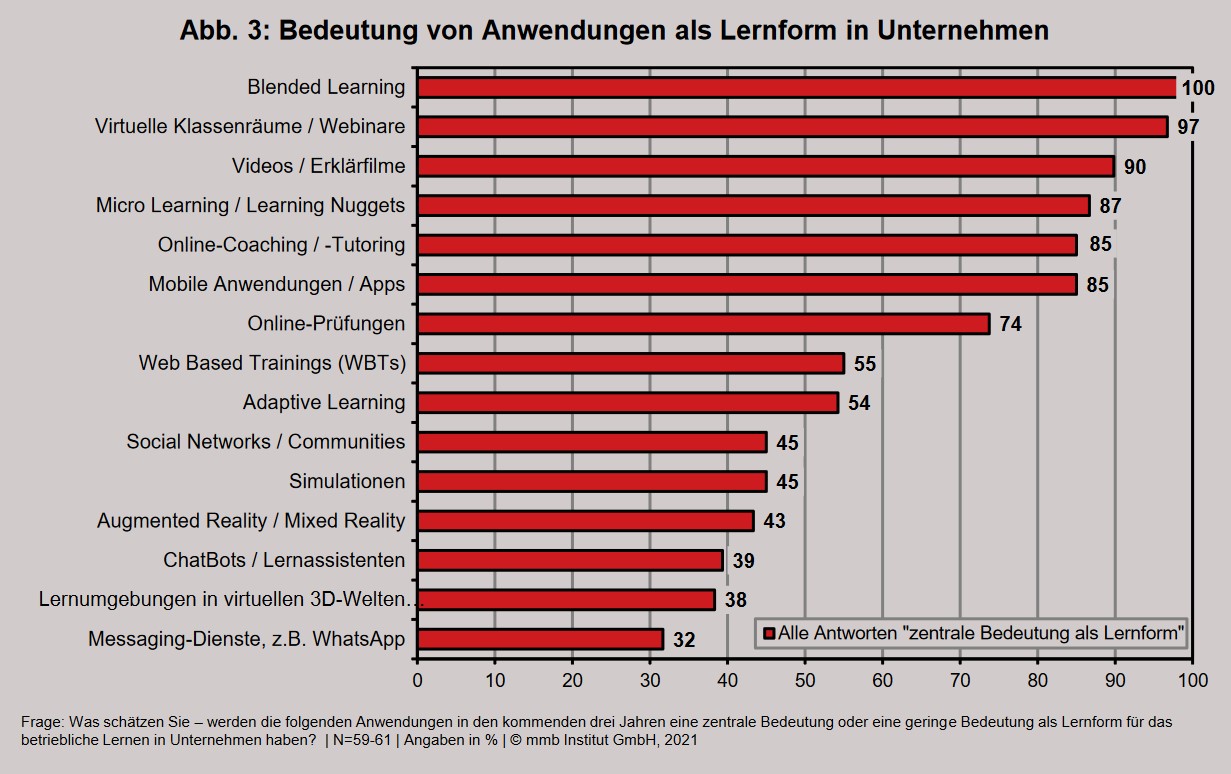
Die Benchmarking Studie belegt damit in weiten Zügen die bereits im mmb Trendmonitor 2020/2021 vorgestellten Tendenzen. Auf die zukünftige Bedeutung der jeweiligen Lernform im Unternehmen befragt, ergaben sich dort zwei eindeutige Gewinner: Blended Learning (100%) und der Einsatz von virtuellen Klassenräumen/Webinaren (97%). Ebenfalls eine wichtige Rolle sahen die befragten Unternehmen im Einsatz von Videos (90%), gefolgt von Micro-Learning, Online-Coaching und Mobile-Learning. Eher weniger Bedeutung wurde dagegen Chatbots, virtuellen 3D-Welten oder Messaging Diensten beigemessen. Bei dem Blick auf den kommerziellen Erfolg der jeweiligen Lernform bietet sich ein ähnliches Bild, allerdings liegen hier mobile Anwendungen auf dem ersten Platz. Ein interessantes Detail im Trendmonitor: Online Coaching taucht dieses Jahr zum ersten Mal im Ranking auf und hat es direkt unter die Top 5 geschafft.
Fazit:
Der Trend im Corporate Learning heißt auch für das Jahr 2022: Deutlich mehr Digital und weniger Präsenz. Die wichtigsten Tools sind dabei Blended Learning und der Einsatz von virtuellen Klassenräumen/Webinaren, gefolgt von Videos, Micro-Learning und Mobile-Learning. Da die Tendenz zu mehr Homeoffice und mobilen Arbeitsplätzen anhält, dürfte auch Online-Coaching in Zukunft eine wichtigere Rolle spielen.
Sie haben weitere Fragen?
Die Bildungsexperten von LinguaTV stehen Ihnen für eine kostenlose Beratung gerne zur Verfügung. Nutzen Sie dafür einfach unser Kontaktformular. Für weitere Informationen zum Thema Digitales Sprachtraining empfehlen wir Ihnen auch unsere kostenlosen Whitepaper und Webinare.