
Corporate Learning: New Normal oder Rolle rückwärts?
Zwischen Euphorie und Ernüchterung: Was ist aus dem Digitaliserungsschub im Corporate Learning geworden? Das Team von LinguaTV hat dazu aktuelle Studienergebnisse und Praxisbeispiele zusammengetragen.

ChatGPT, Amazon und nun ausgerechnet Zoom. Einige Unternehmen sorgen momentan für Schlagzeilen, weil sie ihre Mitarbeitenden aus dem Homeoffice zurück ins Büro holen. Wird hier gerade die Uhr zurückgedreht auf die Zeit vor Corona? Eine aktuelle Veröffentlichung des ifo-Instituts belegt das Gegenteil und beruft sich dabei auf mehrere wissenschaftliche Studien. Demnach arbeiten zur Zeit etwa 25% aller deutschen Beschäftigten zumindest teilweise von zu Hause. Ein Wert, der seit Aufhebung der Corona-Homeoffice-Pflicht im April 2022 nahezu konstant geblieben ist. Der Anteil offener Stellenanzeigen mit Homeoffice-Option ist seitdem sogar weiter gestiegen. Das dürfte auch mit den Wünschen der Beschäftigten zusammenhängen. So wollen drei Viertel aller, die einmal die Vorzüge des Homeoffice kennengelernt haben, diese auch in Zukunft nicht mehr missen. Statt einem “entweder oder” werden sich in den meisten Betrieben nun hybride und im Vergleich zu Vor-Corona deutlich flexiblere Arbeitsmodelle durchsetzen, so das Fazit der Studie.
Dieser Trend spiegelt sich auch im Corporate Learning wider. So gaben mit 91,8% nahezu alle der 448 in der Benchmarking Studie befragten Unternehmen an, in der betrieblichen Aus- und Weiterbildung bereits eLearning-Angebote zu nutzen. 16% der Unternehmen hat diese erst während der Pandemie neu eingeführt. Der Anteil von digitalem Lernen gegenüber Präsenzveranstaltungen ist im Vergleich zum Corona-Jahr 2021 zwar wieder deutlich gesunken, er liegt mit 36,3% jedoch immer noch deutlich über dem Vor-Corona-Niveau. Insbesondere in Unternehmen und Abteilungen, die zuvor ausschließlich auf Präsenzangebote gesetzt hatten, war der Pandemiebedingte Wechsel ins Homeoffice und die Einführung von Videokonferenzen ein echter Türöffner für digitale Trainingslösungen. Philip Gienandt, Geschäftsführer von LinguaTV, kann das bestätigen. Vor Corona musste er in Beratungsgesprächen oft erstmal eine gewisse Überzeugungsarbeit leisten. Das hat sich inzwischen deutlich verändert. “Wenn die Hälfte der Belegschaft im Homeoffice arbeitet und die meisten Meetings online stattfinden, ist es jetzt ganz normal, dass auch das Sprachtraining online stattfindet.”
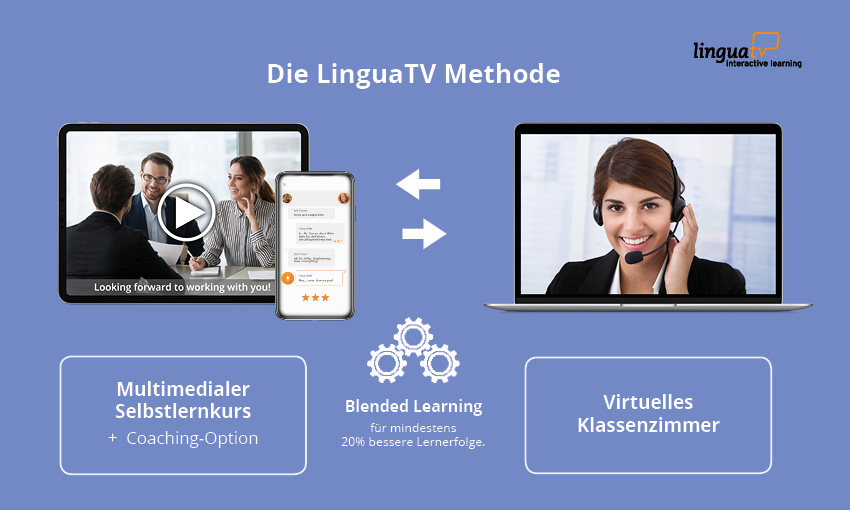
Die meisten Unternehmen wollen eine Lösung, die sich möglichst einfach und flexibel in den Arbeitsalltag integrieren lässt. Ein gutes Beispiel dafür ist die Allianz. Sprachkurse im Präsenzunterricht waren kostenintensiv und relativ unflexibel, sodass sie nur von sehr wenigen Mitarbeitenden genutzt wurden. Um das zu ändern, führte der Versicherungskonzern während der Pandemie erstmals ein rein digitales Sprachtraining mit Blended Learning Konzept ein. Nach einem umfangreichen Onboarding, inklusive Bedarfsanalyse und Einstufungstests, erhalten die Teilnehmenden Zugang zu den Online-Englischkursen von LinguaTV. Neben den multimedialen Selbstlernkursen, mit Videos und interaktiven Aufgaben, nutzen sie dafür den von Sprachtrainern geführten Unterricht im virtuellen Klassenzimmer. Die Trainingseinheiten können je nach Bedarf gebucht werden und lassen sich dadurch trotz vollem Terminkalender flexibel in den Alltag integrieren.
Auch die Deutsche Post DHL führte während der Pandemie eine rein digitale Trainingslösung ein, um neue Mitarbeitende mit geringen Deutschkenntnissen zu unterstützen. Da es sich hierbei vor allem um Paketzusteller handelt, fiel die Wahl auf eine mobile Lösung per Micro Learning. Dank der kurzen Lerneinheiten und dem Zugang per Smartphone können die Mitarbeitenden nun auch von unterwegs effektiv ihre Deutschkenntnisse verbessern. Ergänzt durch Firmenspezifische Lerninhalte und ein ausgefeiltes Onboarding-Konzept kommt diese Trainingslösung bei den Mitarbeitenden sehr gut an. Das erfolgreiche Projekt wurde inzwischen bereits mehrfach ausgezeichnet.
Fazit
Auch wenn manche Schlagzeile einen anderen Eindruck vermitteln mag – die Corona-Pandemie hatte einen nachhaltigen Effekt auf die Digitalisierung der betrieblichen Weiterbildung. Flexible oder hybride Arbeitsmodelle mit Homeoffice und Videokonferenzen gehören in den meisten Betrieben inzwischen zur Normalität – mit steigender Tendenz. Diesen Anforderungen muss auch das Corporate Learning gerecht werden. Flexible digitale Trainingslösungen, wie das Sprachtraining bei der Allianz oder der Deutschen Post DHL, sind dafür bestens geeignet.
Mehr zum Thema: Die Allianz SE nutzt für das Corporate Learning die digitalen Sprachkurse von LinguaTV. Statt klassischem Präsenzunterricht, der sich nur äußerst schlecht in den Alltag der Mitarbeitenden integrieren ließ, können diese jetzt flexibel und nach eigenem Bedarf Online-Trainingseinheiten buchen. Das erfolgreiche Trainingsprojekt wurde nun mit dem eLearning Award 2023 ausgezeichnet.
Die ausführliche Projektbeschreibung stellen wir Ihnen hier kostenlos als Whitepaper zum Download zur Verfügung.
Sie haben weitere Fragen?
Die Bildungsexperten von LinguaTV stehen Ihnen für eine kostenlose Beratung gerne zur Verfügung. Nutzen Sie dafür einfach unser Kontaktformular.