
5 Tipps für erfolgreiches Microlearning im Unternehmen
Microlearning ist eine sehr effektive Methode, um Mitarbeitende schnell und effizient zu schulen. Die kurzen Lerneinheiten ermöglichen ein gehirngerechtes Lernen und können leicht in den Arbeitsalltag integriert werden. Dies kann dazu genutzt werden, spezifische Fähigkeiten schnell zu erwerben oder vorhandenes Wissen aufzufrischen. Bei der Umsetzung gibt es jedoch ein paar wichtige Punkte zu beachten.
Der Sprachkurs-Anbieter LinguaTV setzt auf eine Kombination von Microlearning und Mobile Learning. Dieser Methodenmix kommt auch beim Sprachtraining der Deutschen Post DHL zum Einsatz und wurde bereits mehrfach ausgezeichnet. Auf Basis dieser Erfahrungen haben die Berliner Sprachlern-Experten fünf Tipps für den erfolgreichen Einsatz von Microlearning im Unternehmen zusammengestellt.

1. Klare Lernziele setzen:
2. Kurze und prägnante Lerneinheiten erstellen:
3. Videos und interaktive Elemente einbinden:
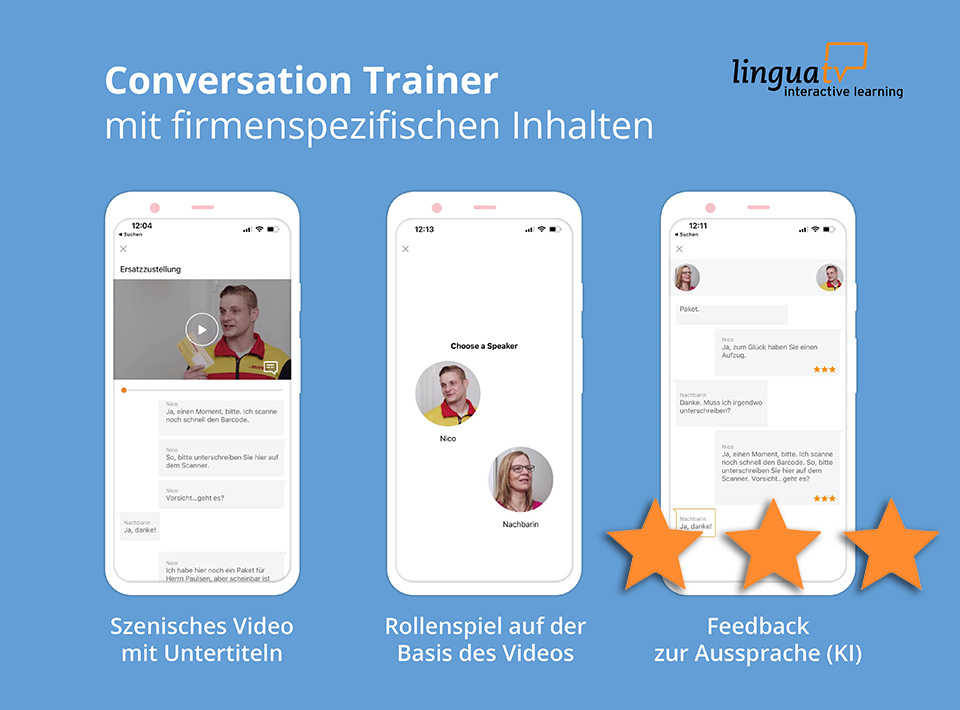
4. Flexibilität und Zugänglichkeit sicherstellen:
Eine der größten Stärken von Microlearning ist seine Flexibilität und Zugänglichkeit. Damit dieser Vorteil optimal zum Tragen kommt, sollten die Lerneinheiten auf verschiedenen Geräten, wie Smartphones, Tablets und PCs, abrufbar sein, damit die Mitarbeitenden jederzeit und überall darauf zugreifen können. Insbesondere für den bequemen Zugang per Smartphone müssen die Inhalte entsprechend optimiert und über eine mobile App erreichbar sein. Darüber hinaus sollten die Lerninhalte so gestaltet werden, dass sie sich leicht in den Arbeitsalltag integrieren lassen, ohne dabei den Arbeitsfluss zu stören.5. Fortschritt verfolgen und Feedback einholen:
Um den Erfolg des Microlearning-Programms zu messen und kontinuierlich zu verbessern, ist es wichtig, den Fortschritt der Lernenden zu verfolgen und regelmäßig Feedback einzuholen. Analysetools können dabei helfen zu überprüfen, welche Lerneinheiten am effektivsten sind und wo möglicherweise Verbesserungsbedarf besteht. Darüber hinaus sollten die Meinungen und das persönliche Feedback der Mitarbeitenden eingeholt und erst genommen werden, um sicherzustellen, dass die Lerninhalte ihren Bedürfnissen entsprechen und sie optimal unterstützen.Fazit:
Diese fünf Tipps bieten eine gute Grundlage für den erfolgreichen Einsatz von Microlearning im Unternehmen. Sie haben sich im Sprachtraining bewährt und lassen sich problemlos auch auf viele weitere Bereiche der betrieblichen Weiterbildung übertragen. Bei weiteren Fragen stehen die Bildunsgexperten von LinguaTV gerne zur Verfügung.
Zur weiteren Lektüre empfehlen wir Ihnen unser kostenloses Whitepaper: Sprachtraining mit Microlearning bei der Deutschen Post DHL.
Werfen Sie gerne auch einen Blick auf unsere aktuellen Veranstaltungen und kostenlose Webinare zum Thema Corporate Learning.
Für weitere Informationen und eine kostenlose Beratung zum Thema “Digitales Sprachtraining” stehen Ihnen die Bildungsexperten von LinguaTV gerne zur Verfügung.