
Schritt-für-Schritt: Die Einführung digitaler Trainingslösungen im Unternehmen
Digitale Trainingslösungen bieten zahlreiche Vorteile für die betriebliche Weiterbildung. Bei der Einführung gibt es jedoch ein paar wichtige Punkte zu beachten. Die Sprachkurs-Experten von LinguaTV haben hier fünf Tipps zusammengestellt, die sich in der langjährigen Praxis bewährt haben.

In Zeiten hybrider und zunehmend flexibler Arbeitsmodelle gewinnen digitale Bildungsangebote immer weiter an Bedeutung. Selbst erfahrene Personalprofis stehen bei dieser Transformation häufig vor vielen neuen Fragen und möglichen Stolpersteinen. Doch die meisten Fehler können zum Glück vermieden werden. Die Bildungsexperten von LinguaTV entwickeln bereits seit 2006 digitale Lösungen für das Sprachtraining im Unternehmen und haben auf der Basis dieser Erfahrungen hier die wichtigsten Punkte zusammengefasst.
1. Bedarfsanalyse und Lernziele
Vor der Einführung einer digitalen Trainingslösung, ist es wichtig, eine gründliche Bedarfsanalyse durchzuführen. An welche Mitarbeitenden soll sich die neue Trainingslösung richten? Welche Fähigkeiten und Kenntnisse sind notwendig? Und in welcher Zeit (grundsätzliche Laufzeit, also Dauer des Trainings; Lernen in der Arbeits- und / oder Freizeit) sollen diese vermittelt werden? Durch die Einbeziehung verschiedener Abteilungen und Hierarchieebenen kann sichergestellt werden, dass die Trainingsbedarfe möglichst vollständig erfasst werden. Dies hilft nicht nur bei der Auswahl der passenden Lerninhalte, sondern fördert auch die Akzeptanz der Trainingsprogramme bei den Mitarbeitenden.
2. Auswahl der richtigen Plattform: Benutzerfreundlichkeit ist entscheidend
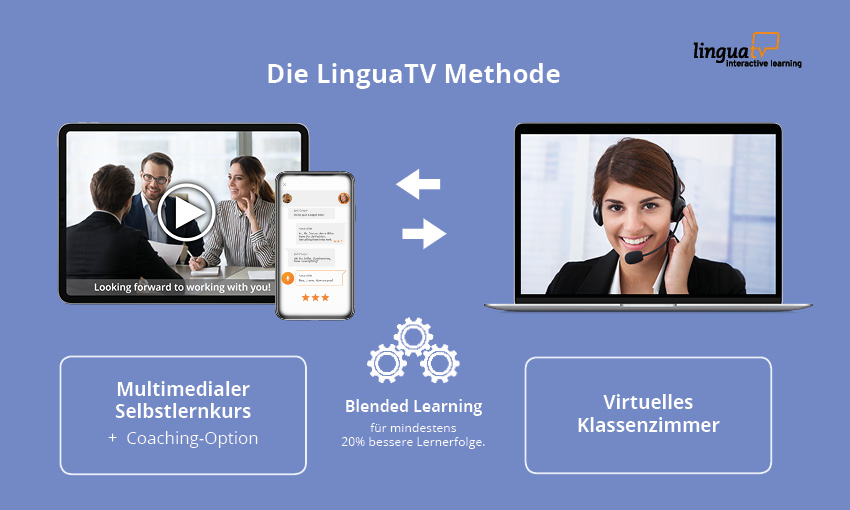
Die Wahl der richtigen Lernplattform ist entscheidend für den Erfolg der digitalen Trainingsinitiative. Die Plattform sollte dabei möglichst benutzerfreundlich und intuitiv bedienbar sein. Eine komplizierte Handhabung kann schnell zu Frustration bei den Nutzern führen und die Lernbereitschaft mindern. Darüber hinaus sollte die Plattform flexibel sein und unterschiedliche Lernformate unterstützen, wie z.B. Videos, interaktive Übungen oder virtuelle Klassenräume (z.B. in Form von Blended Learning).
Ein weiteres Kriterium ist die Skalierbarkeit der Plattform, um auch zukünftige Anforderungen und eine wachsende Zahl von Nutzern zu bewältigen. Eine besonders effektive Lösung bieten mobile Anwendungen mit kurzen Lerneinheiten (Micro Learning). Kleine "Lernsprints" nutzen die begrenzte Aufmerksamkeitsspanne optimal aus und lassen sich flexibel in den Arbeitsalltag integrieren.
3. Inhalte interaktiv und praxisnah gestalten
Einer der größten Vorteile digitaler Trainingslösungen ist die Möglichkeit, Lerninhalte interaktiv und praxisnah zu gestalten. Dies ist eine bewährte Methode, um die Lernmotivation und den Lernerfolg zu steigern. Interaktive Elemente wie Quizfragen, Simulationen und Fallstudien fördern die aktive Teilnahme und helfen den Lernenden, das Gelernte besser zu verankern. Gamification-Elemente, wie Ranglisten und Belohnungssysteme, können die Motivation zusätzlich steigern.
LinguaTV setzt beispielsweise auf einen interaktiven Konversationstrainer, der das aktive Sprechen fördert und dank KI-gestützter Spracherkennung ein direktes Feedback zur Aussprache bietet. Praxisnahe Beispiele und Anwendungsfälle aus dem Unternehmensalltag machen die Lerninhalte insgesamt relevanter und greifbarer. Im Bereich Sprachtraining sollte daher, neben regulären und branchenbezogenen Sprachkursen, auch die Erstellung firmenspezifischer Inhalte (z.B. in Form eines Vokabeltrainers) in Erwägung gezogen werden.
4. Begleitende Unterstützung und Feedback
Auch wenn digitale Trainingslösungen viele Vorteile bieten, sollte der menschliche Faktor nicht vernachlässigt werden. Bei Bedarf sollten die Mitarbeitenden jederzeit Unterstützung erhalten können. Dies kann beispielsweise durch Mentoren oder durch regelmäßige virtuelle Sprechstunden geschehen. LinguaTV bietet hier als Ergänzung zu den Selbstlernkursen die Option einer persönlichen Lernbetreuung (Online-Coaching).
Feedback spielt ebenfalls eine zentrale Rolle: Den Teilnehmern sollte ermöglicht werden, ihre Erfahrungen und Verbesserungsvorschläge einzubringen. Dies hilft nicht nur, die Trainingslösungen kontinuierlich zu verbessern, sondern zeigt auch, dass die Meinungen der Mitarbeiter geschätzt werden.
5. Erfolgsmessung und kontinuierliche Optimierung
Um den Erfolg der digitalen Trainingsmaßnahmen zu bewerten, sollten von Anfang an klare Ziele und KPIs definiert werden. Diese können z.B. die Abschlussquote der Trainingsmodule, die Ergebnisse von Wissenstests oder die Zufriedenheit der Teilnehmer umfassen. Regelmäßige Auswertungen und Berichte helfen dabei, den Fortschritt zu überwachen und mögliche Schwachstellen zu identifizieren. Auf Basis dieser Erkenntnisse können die Trainingslösungen kontinuierlich optimiert und flexibel an die sich verändernden Bedarfe innerhalb des Unternehmens angepasst werden.
Fazit
Die Einführung digitaler Trainingslösungen ist ein wichtiger Schritt, um die betriebliche Weiterbildung fit für die Zukunft zu machen. Eine sorgfältige Planung und Umsetzung sind dabei entscheidend für den Erfolg. Durch eine gründliche Bedarfsanalyse, die Auswahl der passenden Plattform, die interaktive Gestaltung der Inhalte, begleitende Unterstützung und regelmäßige Erfolgsmessung können die Grundlagen für eine effektive und nachhaltige Weiterbildung sichergestellt werden.
Werfen Sie gerne auch einen Blick auf unsere aktuellen Veranstaltungen und kostenlose Webinare zum Thema Corporate Learning.
Für weitere Informationen und eine kostenlose Beratung zum Thema “Digitales Sprachtraining” stehen Ihnen die Bildungsexperten von LinguaTV gerne zur Verfügung.