
Barrierefrei: Online-Sprachtraining trotz Sehbehinderung
Welche Standards muss eine eLearning-Plattform erfüllen, damit auch Menschen mit einer Sehbehinderung sie effektiv nutzen können? Das Beispiel einer Lernerin zeigt typische Hürden und praktische Lösungen für ein barrierefreies eLearning.
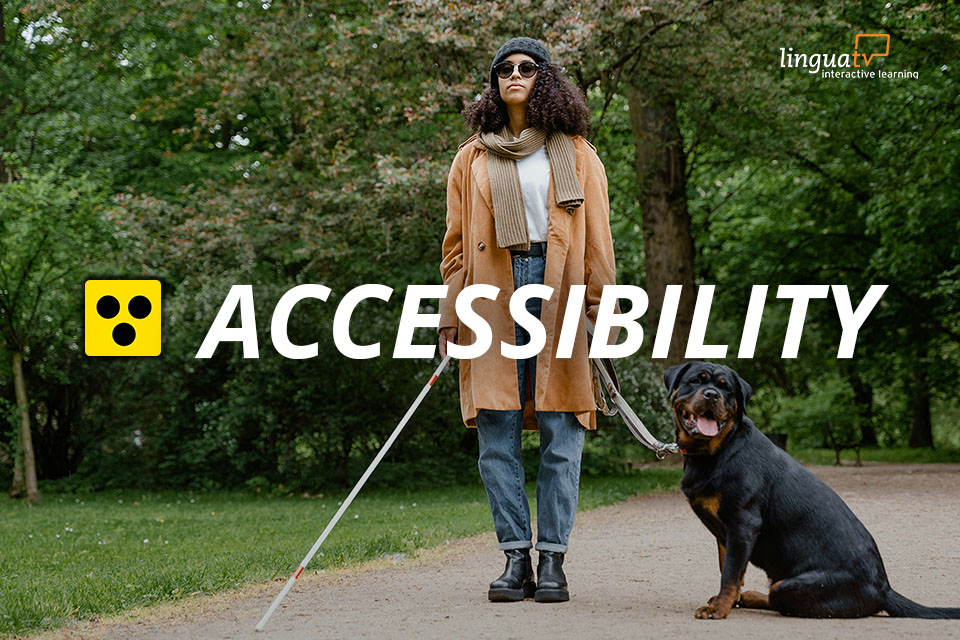
Martina ist ab sofort auch für die Personalentwicklung der europäischen Tochtergesellschaften eines Pharmakonzerns zuständig. Für die neue Aufgabe möchte sie gerne ihre Englischkenntnisse verbessern. Da sie unter einer starken Sehbehinderung leidet, navigiert sie mithilfe von Screenreadern und Tastaturbefehlen durch eine Sprachlernplattform. Doch die ersten Erfahrungen sind alles andere als reibungslos. Auf vielen Seiten sind die Inhalte unstrukturiert, Bilder fehlen, alternative Beschreibungen und wichtige Funktionen sind nur per Maus zugänglich. Martina ist frustriert, denn ohne die richtige Navigation wird das Sprachenlernen zu einer Herausforderung.
Wichtige Kriterien für barrierefreies eLearning
Die Barrierefreiheit einer Webseite oder eLearning-Plattform ist für blinde Nutzer von enormer Bedeutung. Laut den Web Content Accessibility Guidelines (WCAG), die als internationaler Standard für die Gestaltung barrierefreier Webinhalte gelten, müssen Webseiten klare Strukturierungen und Beschreibungen bieten, die auch von Hilfstechnologien wie Screenreadern interpretiert werden können. Martina benötigt beispielsweise eine gut strukturierte Navigationsleiste, welche es ihr ermöglicht, schnell zwischen den verschiedenen Lernmodulen zu wechseln. Ebenso müssen alle Bilder mit sogenannten "alt-Tags" versehen werden, die eine textuelle Beschreibung des Bildes liefern, da Martina nur den Text hört.
Besondere Bedeutung kommt auch den interaktiven Elementen der Webseite zu. Formulare, Schaltflächen oder Eingabefelder müssen korrekt mit Labels und Anweisungen versehen werden, damit Martina problemlos mit der Seite interagieren kann. Eine eLearning-Plattform, die diese grundlegenden Standards erfüllt, ermöglicht es ihr, die Sprache auf eine Weise zu lernen, die für sie genauso effektiv ist wie für sehende Lernende. Doch nicht nur die technischen Standards sind entscheidend, sondern auch die Gestaltung der Inhalte. Martina muss in der Lage sein, sich mit ihren Hilfstechnologien durch die Inhalte zu bewegen, ohne dabei auf Barrieren zu stoßen.
Im Juni 2025 tritt das Barrierefreiheitsstärkungsgesetz (BFSG) in Kraft, das die Anforderungen an die Barrierefreiheit von Webseiten und mobilen Anwendungen in Deutschland weiter verstärkt. Das Gesetz wird dazu beitragen, dass mehr Unternehmen und Institutionen ihre digitalen Angebote auf die Bedürfnisse von Menschen mit Behinderungen ausrichten und einen barrierefreien Zugang zu Produkten und Dienstleistungen ermöglichen. Ein wichtiger Schritt hin zu einer inklusiveren Gesellschaft, in der Menschen mit Behinderungen gleichberechtigt teilnehmen können.
Martina hat bei LinguaTV schließlich eine Sprachlernplattform gefunden, die ihre Anforderungen erfüllt. Mit einer gut strukturierten, barrierefreien Webseite, die für ihren Screenreader optimiert ist, kann sie nun problemlos Englisch lernen und möchte demnächst auch mal die Spanischkurse ausprobieren. Durch die Verbesserung der digitalen Zugänglichkeit können Menschen wie Martina ihre Bildungsziele erreichen und eine neue Sprache erlernen, ohne dabei auf Barrieren zu stoßen.
Sie haben weitere Fragen?
Die Bildungsexperten von LinguaTV stehen Ihnen für eine kostenlose Beratung gerne zur Verfügung. Nutzen Sie dafür einfach unser Kontaktformular. Für weitere Informationen zum Thema Digitales Sprachtraining empfehlen wir Ihnen auch unsere kostenlosen Whitepaper und Webinare.