Social learning and peer learning for language training in the company

What advantages do collaborative forms of learning offer? And how can they be integrated into corporate learning? We have summarized the most important recommendations for you in this best-practice guide.


Advantages of collaborative learning

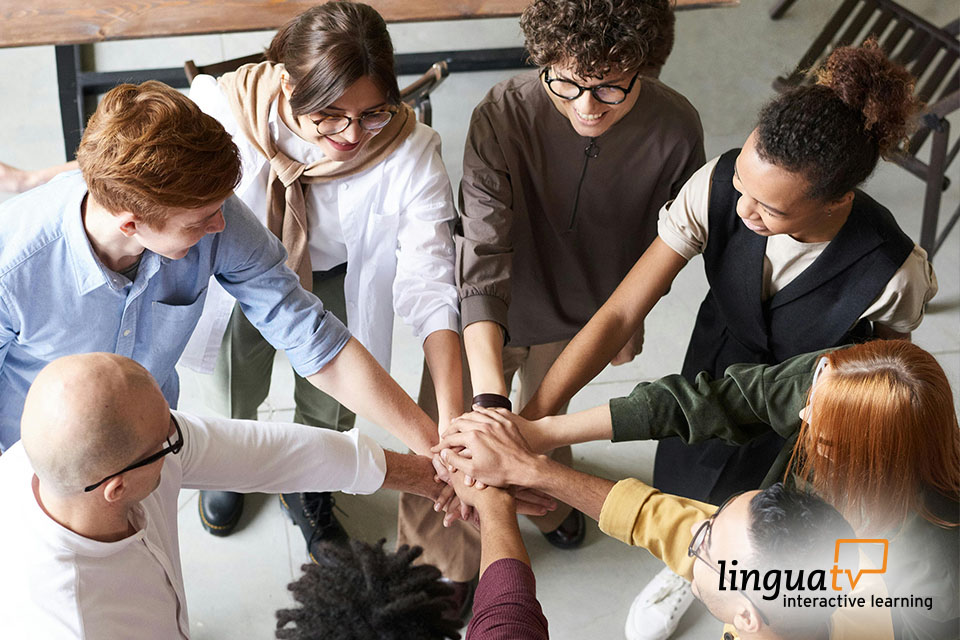
Collaborative learning methods, such as social learning and peer learning, rely on exchange and cooperation between learners. Colleagues with different levels of prior knowledge, native speakers or advanced learners support each other in language acquisition. This form of learning is characterized by a high degree of practical relevance. Instead of abstract exercises from the textbook, the focus is on application in real-life situations. In this way, language is not understood and experienced as an isolated learning objective, but as a means of communication in the daily work context.

Another advantage lies in the motivation to learn. Inhibitions can be overcome more easily in exchanges with familiar people. Making a mistake is not so bad and is perceived by learners as part of the natural learning process. At the same time, a supportive atmosphere is created that promotes the progress of each individual. A typical example is learning partnerships or language tandems, for example when one person wants to learn German and the other English. However, without professional guidance, most learners are quickly overwhelmed. It therefore makes sense to integrate collaborative learning into a comprehensive learning concept. Blended learning is particularly suitable for this.

Integration into a blended learning concept

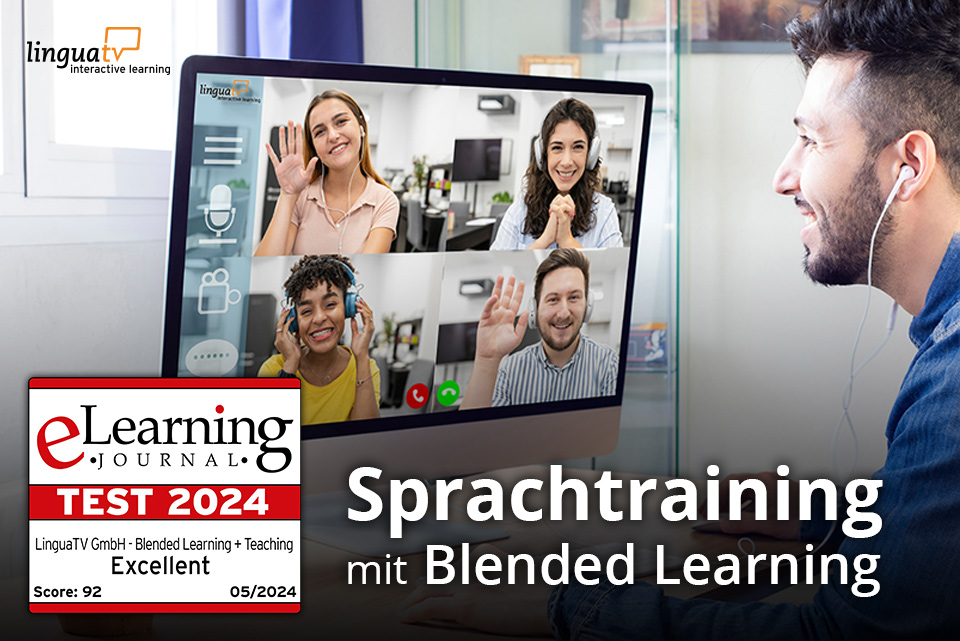
A blended learning approach combines joint lessons in a virtual classroom with self-study courses that include videos and interactive exercises, for example. This creates a learning environment that is both tied to fixed dates and allows for practice independent of time and place. Social learning picks up on this structure by encouraging participants to support each other - not only during sessions with teachers, but also in phases of self-study. Reflecting together via video lessons, testing each other's vocabulary knowledge and practising dialogues strengthen the learning bond and ensure a continuous exchange. This approach has proven its worth for use in companies, as the examples of Gegenbauer or Allianz SE illustrate.


Social learning in the virtual classroom

In the virtual classroom, the teacher takes on the role of moderator and expert, teaching important language structures, providing feedback and guiding group work. Breakout sessions offer space for small groups in which tandems or small teams solve practical tasks. For example, after a joint video presentation, a role-play on the topic of negotiation can be organized, with the other learners acting as observers and providing targeted feedback on pronunciation, word choice and conversation strategies. The plenary discussion at the end allows students to reflect on their own experiences and promotes awareness of linguistic subtleties. Through targeted peer feedback phases, what has been learned is immediately tried out and documented in a social context.


Supplemented by informal peer learning

In addition to fixed blended learning structures, informal learning opportunities make an important contribution to language acquisition. Language tandems can be organized independently of the course schedule by employees reserving fixed times for a brief exchange - for example before project meetings or in virtual break rooms. Topics from the online modules are taken up in a targeted manner or current project content is discussed in the foreign language. Internal company chats in the target language offer additional space for spontaneous communication: work instructions, short status updates or links to relevant specialist articles encourage writing and reading. Peers correct each other in a playful way and give polite advice, creating a trusting learning atmosphere.

Networking with digital tools

Digital whiteboards in the virtual classroom or cloud documents enable the joint creation of vocabulary lists and mind maps. Interactive pinboards collect example sentences and short audio recordings that can be added to and commented on at any time. Gamification elements such as point systems for completed exercises and leaderboards motivate regular participation. Calendar integrations automatically remind you of tandem appointments and virtual meetup sessions. This seamlessly combines formal language lessons with informal peer learning activities and creates a flexible environment for collaborative learning.

Monitoring success and sustainability

To ensure learning success, a combined evaluation can be carried out at regular intervals. Online tests measure progress in grammar and vocabulary, while oral exams in the virtual classroom assess communicative skills. Peer feedback reports supplement these formal assessments with qualitative impressions. A shared online learning diary can help to document individual goals, milestones achieved and open questions. In this way, the learning path remains transparent and everyone involved can make their contribution, be it through professional guidance or peer support.

Conclusion

A blended learning concept that systematically integrates collaborative learning methods creates dynamic, demand-driven language training in the company. The teacher in the virtual classroom provides structured input and moderates learning processes, while online modules enable self-directed practice. Supplemented by informal peer activities and digital tools, we create a comprehensive learning network. This combines formal and informal learning phases, increases motivation and learning success and at the same time promotes team spirit and intercultural skills. Language development thus becomes a lively process that supports employees in the long term and prepares them for the global challenges of day-to-day business.


Do you have further questions?

LinguaTV's education experts are pleased to be at your disposal for a free consultation. Simply use our contact form for this purpose. For more information on digital language training, we also recommend our free whitepapers and webinars.

Contact-Form
 
/@getTextSetListBox/@param
 
 
/@param
 
 
/@param
 
 
/@param
 
 
/@param
 
 
/@getTextSetListBox/@param
 
 
/@param